
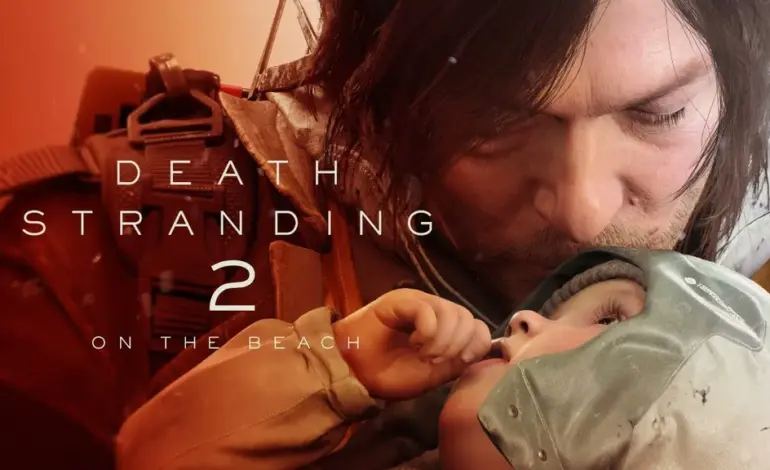
Death Stranding 2: On the Beach Review — Saving the World, One Pristine Package at a Time

A harsh, post-apocalyptic environment crawling with disturbing creatures ready to drain your life in seconds. For a humble courier, trouble is always just around the corner. Welcome back to the world of Death Stranding. Once again, it is up to Sam Porter Bridges to deliver humanity from the brink of extinction.
When Kojima Productions debuted Death Stranding in 2019, it delivered an incredibly unique—and polarizing—experience. It was a bold IP that did not aim to please everyone, but for those who clicked with its bizarre narrative and meditative gameplay, it was unforgettable. While the original could have easily stood as a contained, standalone narrative, Death Stranding 2: On the Beach proves that Sam’s story was far from over.
Lace up your boots and secure your backpack. It’s time to make some deliveries—and this time, we are heading to the land Down Under.
Once, There Was an Explosion…
Death Stranding 2 picks up shortly after the events of the first game. Sam and his BB-28, Lou, have quietly slipped off the grid for a life of peace. However, Fragile—now leading a new organization called Drawbridge—tracks them down and tasks Sam with a special delivery to an old friend, Deadman, out in Mexico.
The opening hours are powerful and haunting. The game seamlessly transitions players from the original story into the sequel, anchored by familiar faces. However, this time, the narrative dives much deeper into Sam’s emotional struggles. He is dealing with grief, loss, and the heavy stress of a home invasion that leaves both Fragile and Lou in harm’s way.
As expected from Hideo Kojima, the broader story is an unconventional, 40-hour visual spectacle that keeps you guessing. Characters are much better integrated into Sam’s journey, ensuring you rarely feel truly alone, even when scaling isolated peaks.
The Cast: Hits and Misses
The ensemble cast is as weird and wonderful as ever, though some characters land better than others:
-
Higgs Returns: Higgs is reintroduced in a stunning, mysterious sequence alongside strange red mechs. However, his new combat style—wielding an electric guitar that fires energy pulses while fighting a cyborg samurai—leans heavily into “cringe” territory, eroding his sinister edge and turning him into more of a theatrical cartoon villain.
-
Rainy & Tomorrow: Two new DOOMS sufferers with fascinating abilities (summoning Timefall and producing destructive tar, respectively). While visually interesting, they feel slightly underutilized outside of their specific narrative chapters.
-
Tarman & Dollman: The absolute standouts of the supporting cast. Tarman (bearing the striking likeness of filmmaker George Miller) steers the DHV Magellan ship and offers deeply detailed glimpses into his tragic backstory. Dollman is equally fascinating, quickly becoming a new fan favorite.
DOOMS Down Under
Let’s address the elephant in the room: yes, this is still heavily focused on logistics, traversal, and fetch-quests. You will still find yourself delivering a pizza across a treacherous mountain range to a guy who records tar monster noises. And honestly? It is incredibly fun.
The environments are pristine, varied, and visually stunning. Traversal remains its own deeply rewarding puzzle—plotting routes, anticipating hazards, and managing your loadout. However, Kojima clearly heard the “walking simulator” criticisms. In Death Stranding 2, you spend the vast majority of your time comfortably strapped into a Pick-up Truck.
Vehicular traversal is vastly improved and highly versatile. Driving across rivers, navigating sand dunes, and bouncing over enemy camps is surprisingly relaxing, alleviating the heavy stress of the first game’s on-foot cargo balancing. This reliance on vehicles is necessary, as Sam is eventually transported across the globe to Australia via Plate Gates—massive teleportation structures that carry their own hazards, including devastating, physics-altering earthquakes.
That’s Not a Knife…
Not everyone is willing to join hands and connect the Chiral Network. Heavily armored human factions and mechanical enemies have established bases across the map, requiring Sam to get inventive.
Combat feels far more significant and dynamic this time around. You are given a massive arsenal of lethal (MP bullets), non-lethal (electrical charges), and vehicle-mounted weapons. Clearing out enemy camps is genuinely enjoyable, largely because the game rarely forces you into a specific playstyle.
However, there is one major sticking point: the slow-motion kill cam. Every single time you eliminate an enemy, the game triggers a brief slow-motion effect. While cinematic at first, it entirely disrupts the flow of combat during massive firefights. It would have been far more effective if reserved exclusively for the final enemy in an encounter.
Boss fights—particularly against massive BTs—are excellent and challenging. Coming away unscathed is tough, and failure carries real consequences. Getting eaten by a boss still triggers a Voidout, permanently altering the map by leaving a massive, impassable crater that forces you to reroute future deliveries.
The Chiral Network Returns
The asynchronous multiplayer elements of the Chiral Network are back and better than ever. Players can build structures—like Timefall Shelters, bridges, and generators—that populate in other players’ worlds.
Collaborating to build massive infrastructure projects like highways and monorail tracks is deeply satisfying. However, if you are playing during a heavily populated launch window, you might occasionally suffer from “freeloader syndrome.” Early in the game, the map can become so saturated with other players’ structures that your own contributions feel unnecessary. You might burn all your materials building a bridge, only to realize a better one already exists 50 feet away.
Despite this minor gripe, pooling resources to pave a safe highway across the treacherous outback—ensuring your truck full of volatile chemicals doesn’t flip over a rock—remains one of the most rewarding gameplay loops in modern gaming.
The Verdict
Death Stranding 2: On the Beach is a near-perfect example of how to execute a sequel. It builds on the brilliant foundation of the original, smooths out the clunky mechanics, and delivers a compelling, slightly more accessible story.
If you did not click with the core gameplay loop of the first game, this sequel will not change your mind; it plays almost identically to the original. But for returning Porters, this is a triumphant, comforting, and utterly unique experience. Driven by breathtaking visuals and an unparalleled asynchronous multiplayer system, Death Stranding 2 cements itself as a massive standout in the PlayStation 5 library.